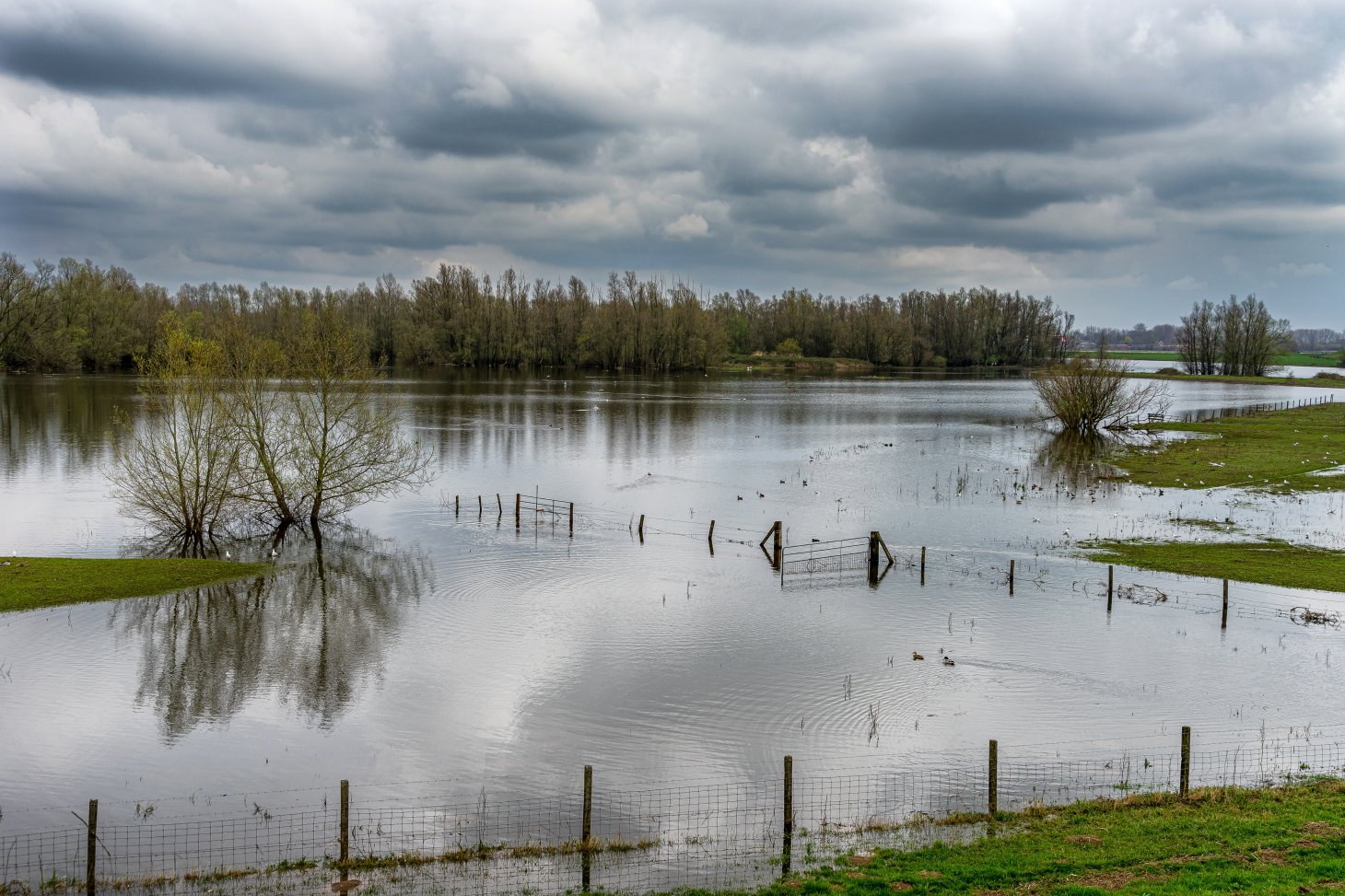
This winter has been a testing time for everyone on site. According to the Met Office, repeated bands of rain throughout January and February have left many parts of the UK “feeling relentlessly wet”. Southern England experienced one of its wettest Januarys on record. The Met Office’s climate assessments confirm a clear trend: UK winters are becoming wetter, with the 2023–24 winters the wettest on record for England and Wales.
In that context, it’s reasonable to ask how well our main construction systems cope when winter rain turns into weeks of near-continuous downpours - especially when trying to keep housebuilding programmes on track.
Timber frame in a winter that doesn’t dry out
Structural timber has many advantages and, when moisture is properly controlled, can perform extremely well. But timber is at its most vulnerable when exposed to prolonged, persistent wetting, particularly during the build phase.
Guidance from the Structural Timber Association highlights that moisture defects in timber structures “can be a costly problem to remediate”. Timber is naturally susceptible to decay, and where water ingress or high humidity leads to elevated moisture levels, this can reduce strength and ultimately affect structural integrity.
The Timber Development UK reinforces this: timber on site is often exposed to far higher moisture levels than in its final, intended condition. If that excess moisture isn’t allowed to drain and dry, issues such as staining, mould, dimensional movement and fungal decay can follow.
In a winter like this one, some common pitfalls become more likely:
- Frames going up in the rain with limited opportunity for natural drying.
- Sheathing and insulation enclosed while still wet, trapping moisture within the wall build-up.
- Elevated moisture contents in sole plates, studs and OSB for extended periods, increasing decay risk.
- Movement and cracking as saturated timber later dries, affecting finishes and interfaces with brick or blockwork.
None of this makes timber frame unusable in a wet UK climate. But it does mean that, as winters get wetter, more programme time, more temporary protection and more on-site moisture monitoring are needed just to keep risk at an acceptable level.
How aircrete behaves differently in wet conditions
By contrast, masonry construction using aircrete is inherently more tolerant of wet site conditions. It isn’t immune to weather delays but is significantly less vulnerable to long-term moisture-related damage – and crucially, it does not carry the biological decay risks associated with timber.
Aircrete’s closed-cell structure gives it excellent resistance to water penetration, enabling it to be used in external walls in line with Approved Document C requirements for resistance to moisture. Celcon Foundation Blocks are similarly resistant to water penetration, with proven freeze–thaw and sulphate resistance below ground.
Aircrete also offers outstanding flood resilience: it does not rot, warp or degrade when wet. Timber construction, by comparison, is much more prone to water damage and, depending on severity, may require remedial work after flooding.
In practical terms, this means aircrete offers:
- Inherent tolerance of wet conditions
- No risk of rot or decay
- Stable, predictable movement
- Resilient in both heavy rainfall and flood scenarios
For housebuilders trying to maintain programme certainty through persistent heavy rain, this additional robustness matters.
In a wetter UK, resilience matters
As UK winters continue to get wetter, it’s sensible for the industry to keep moisture risk front of mind.
Timber frame can deliver excellent homes but in persistently wet conditions it requires tighter control over protection, sequencing and verification before closing up the building. Those measures work, but they add complexity, cost and potential delay.
For many housebuilders, that’s exactly why aircrete continues to stand out. It is simply better suited to the reality of building in a UK climate where wet weather isn’t an exception - it’s a recurring feature, and where predictable performance and programme certainty matter more than ever.