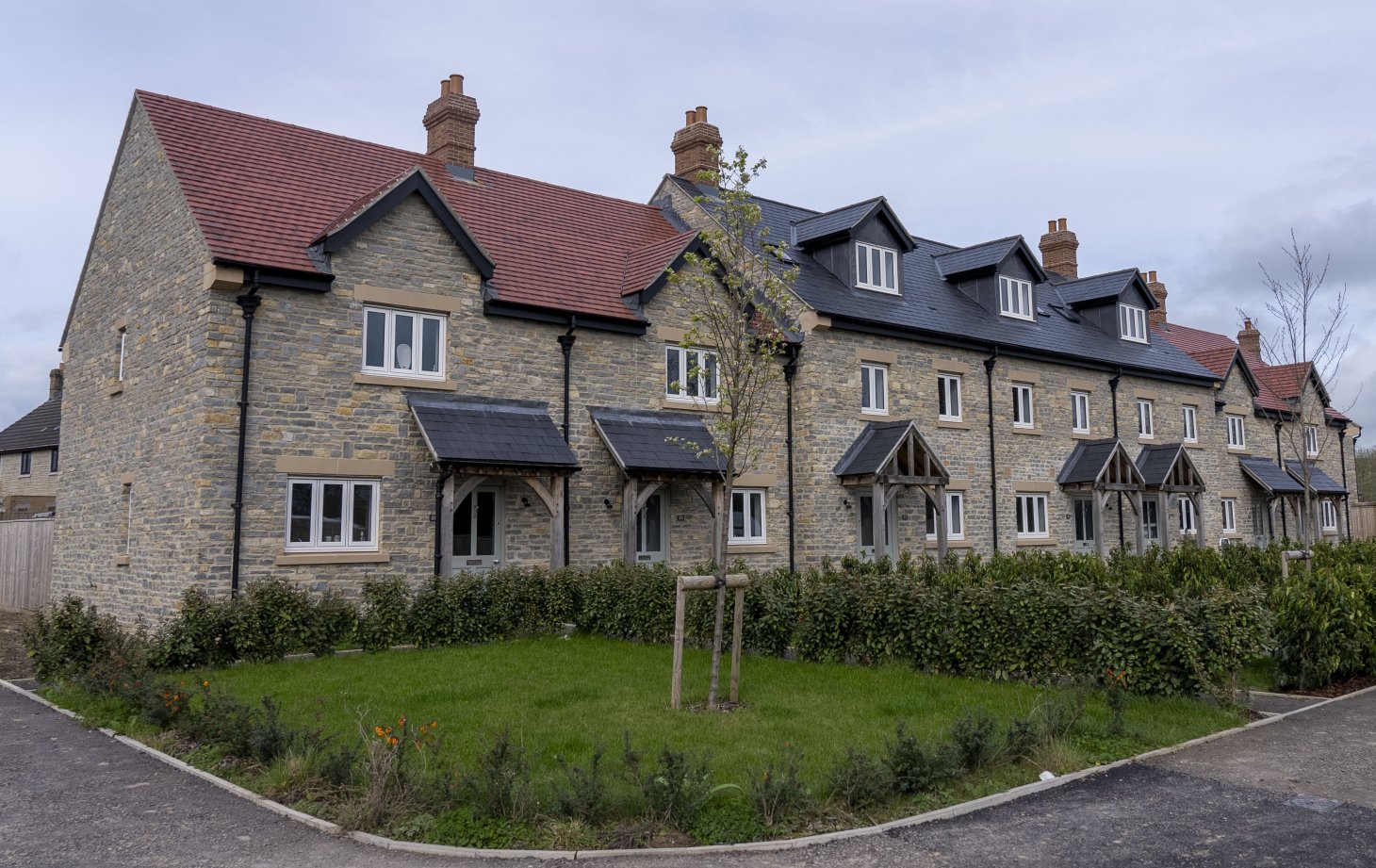
Phil Knight, Head of Private Housebuilding gives his thoughts on the importance of SME builders and what the government can do to halt their decline.
Today, SMEs account for just 10% of all new homes built in England – down from around 40% in the 1980s. That decline is not just a problem for small builders; it’s a problem for the nation. Without a thriving SME sector, it is difficult to see how the government can deliver homes at the scale and quality the country needs.
The value of small builders
SMEs bring something different to a housing market dominated by large housebuilders: agility, creativity and a deep connection to place. They broaden the capacity of the industry and help accelerate delivery in areas where demand is greatest.
Small builders are rooted in their communities. They can take on difficult, smaller brownfield land that the volume housebuilders overlook. They use local suppliers, employ local trades, and support apprenticeships—keeping money, skills, and jobs within the regional economy. This “multiplier effect” strengthens local economies and fosters community identity.
SMEs are also just as keen as the volume housebuilders to support innovation. Able to move faster in terms of revisiting their designs, SMEs may have the freedom to trial new materials and methods and are often keen to respond quickly to environmental and design challenges.
At H+H, we’ve seen this first-hand. Our Vertical Wall Panels – an offsite-manufactured, aircrete-based system designed to speed up construction and improve thermal performance – were initially developed for the volume housebuilders. Yet we are also seeing the smaller regional builders adopting this innovative approach. Their willingness to experiment helps drive improvements across the industry.
Innovation and environmental progress
Encouraging SME growth is not only about numbers; it’s also about quality and sustainability. Smaller firms are often at the forefront of embracing low-carbon technologies, modern methods of construction, such as Vertical Wall Panels, and energy-efficient design. With the built environment central to the UK’s net zero ambitions, the government will not meet its environmental goals without the commitment of SME housebuilders.
The barriers holding SMEs back
Despite their importance, SME housebuilders face a range of challenges that prevent them thriving. The planning system remains the single biggest barrier. According to the Home Builders Federation’s Housing Market Intelligence Report 2025, over 90% of SMEs identify planning delays as a major challenge.
Large developers can weather these delays by switching resources to other sites. Smaller firms, often reliant on a single live project, do not have that luxury. The result is lost time, lost income, and, too often, lost businesses.
Access to finance remains another persistent problem. Many lenders view small development projects as higher risk, particularly when Section 106 (S106) affordable housing obligations are uncertain. When Registered Providers are unwilling to acquire small numbers of affordable homes with say, fewer than 30 units, SMEs can find themselves unable to secure the project finance needed to get started. Without intervention, this dynamic will continue to choke off supply.
Labour shortages add yet another layer of difficulty. The construction sector faces an ageing workforce and an urgent need for new entrants. Yet the current apprenticeship funding structure makes it difficult for smaller companies to bring in trainees. Rising minimum wages and National Insurance contributions have not been matched by reforms to the Apprenticeship Levy, leaving SMEs to absorb the costs. If we are serious about sustaining the skilled workforce required for housebuilding, apprenticeship funding should be reviewed and expanded.
Signs of progress – but not yet enough
There are reasons for cautious optimism. The government’s Planning and Infrastructure Bill aims to simplify and speed up development, and the Ministry of Housing, Communities and Local Government has announced a package of measures to support SME builders. These include streamlined planning for smaller developments, eased Biodiversity Net Gain requirements for sites of up to nine homes, and new exemptions from the Building Safety Levy for medium-sized projects.
Homes England has also pledged to release more land exclusively for SMEs and to pilot a Small Sites Aggregator to bring together underused brownfield land.
These are positive steps, but implementation remains slow. With fewer than four years to meet its 1.5 million homes target, the government simply cannot afford to wait.
A call to action
If the government is serious about its pledge to be the party of “builders, not blockers,” it must act decisively to rebuild the SME housebuilding sector. That means:
- Accelerating planning reform to make smaller projects viable and predictable.
- Improving access to finance, including flexible support for sites affected by S106 and affordable housing challenges.
- Reforming apprenticeship funding to encourage more people to enter the industry.
- Reintroducing targeted first-time buyer support to stimulate demand and restore confidence in local markets.
Reversing the decline of small housebuilders will not be easy, but it is essential. The UK cannot build more homes, better homes, or greener homes without the ingenuity, local focus, and commitment of SMEs. Supporting them is not about favouring developers—it’s about ensuring that every community has a chance to grow.
If the government wants to deliver 1.5 million homes, it must start by building a future in which small builders can once again thrive.